Delivering a Seamless 2030 Mobility Journey
Understanding the shifting landscape of digital mobility for a leading automotive company
Research and Concept Design
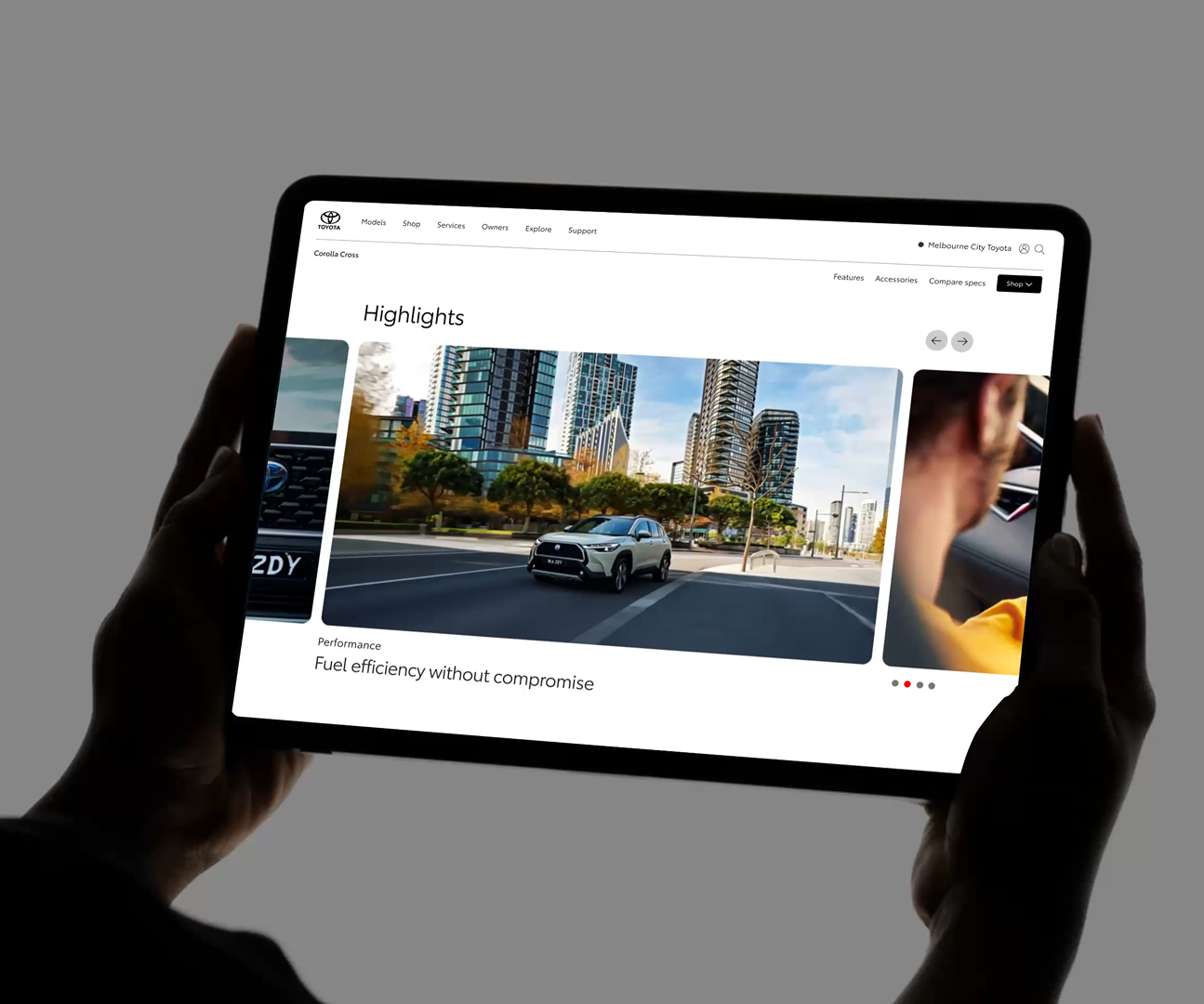
Framing the Future
To define the organisation’s digital evolution, we began by reimagining what “connected mobility” should feel like by 2030. We interviewed stakeholders across Toyota’s ecosystem, audited customer journeys, and analysed competitors’ digital maturity, from EV configurators to subscription models. Our goal was to uncover the whitespace for Toyota to lead through design.

Multi-Modal Research
Customer interviews across thinking styles helped surface unmet needs at every life stage - from first-time buyers to loyalty-stage owners
A global competitor analysis of over 15 OEMs and digital-first brands assessed maturity across data, omnichannel, and personalisation dimensions
Dealership ethnography and observational studies in Melbourne grounded our work in real service environments
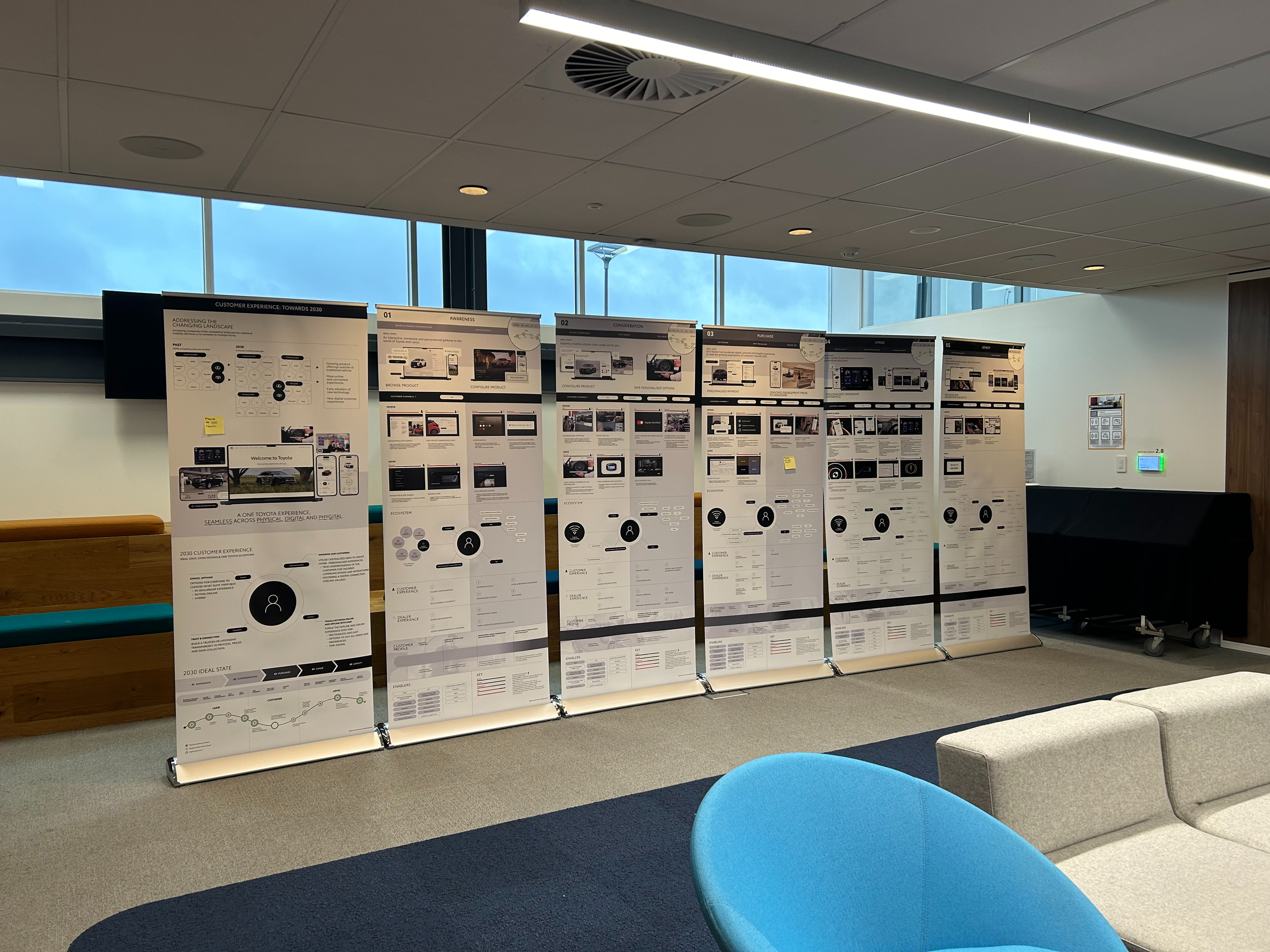
Insights to opportunities
We distilled our findings into opportunity areas across five experience stages - awareness, consideration, purchase, usage, and loyalty - mapping the pain points, moments of truth, and gaps to be bridged in Toyota’s fragmented ecosystem.
Designing & Delivering the Vision
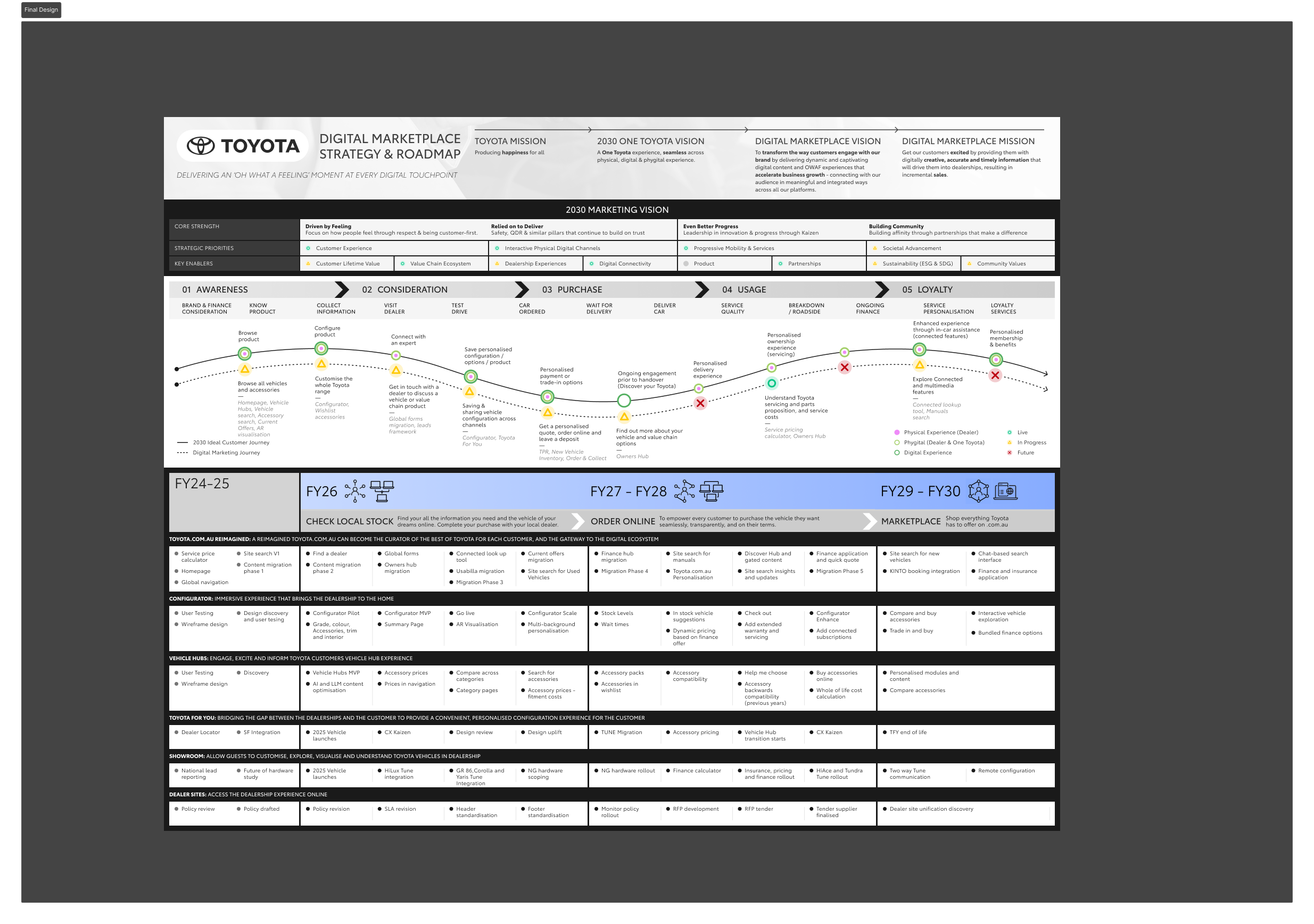
The 2030 Ecosystem
We developed the 2030 Customer Experience Framework, a unified view across digital, physical, and phygital touchpoints. From browsing and configuration to ownership, servicing, and membership, every moment was linked through a vision of seamless, personalised connection .
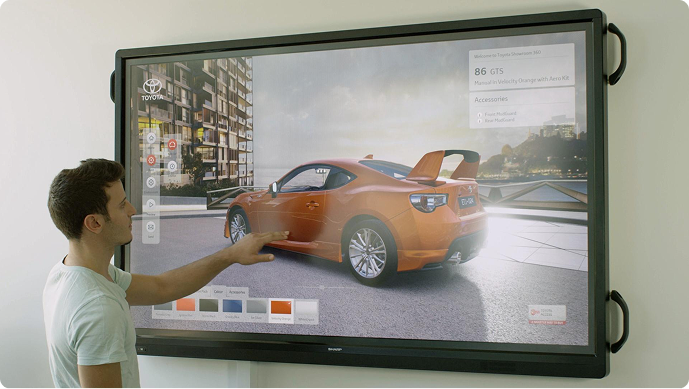
Digital Experience Transformation
We transformed the cross-channel digital experience into a dynamic platform: curating mobility options, surfacing contextual content, and offering tools like live pricing, trade-in estimation, and saved journeys. All content and modules were designed to adapt based on user behaviour and profile data
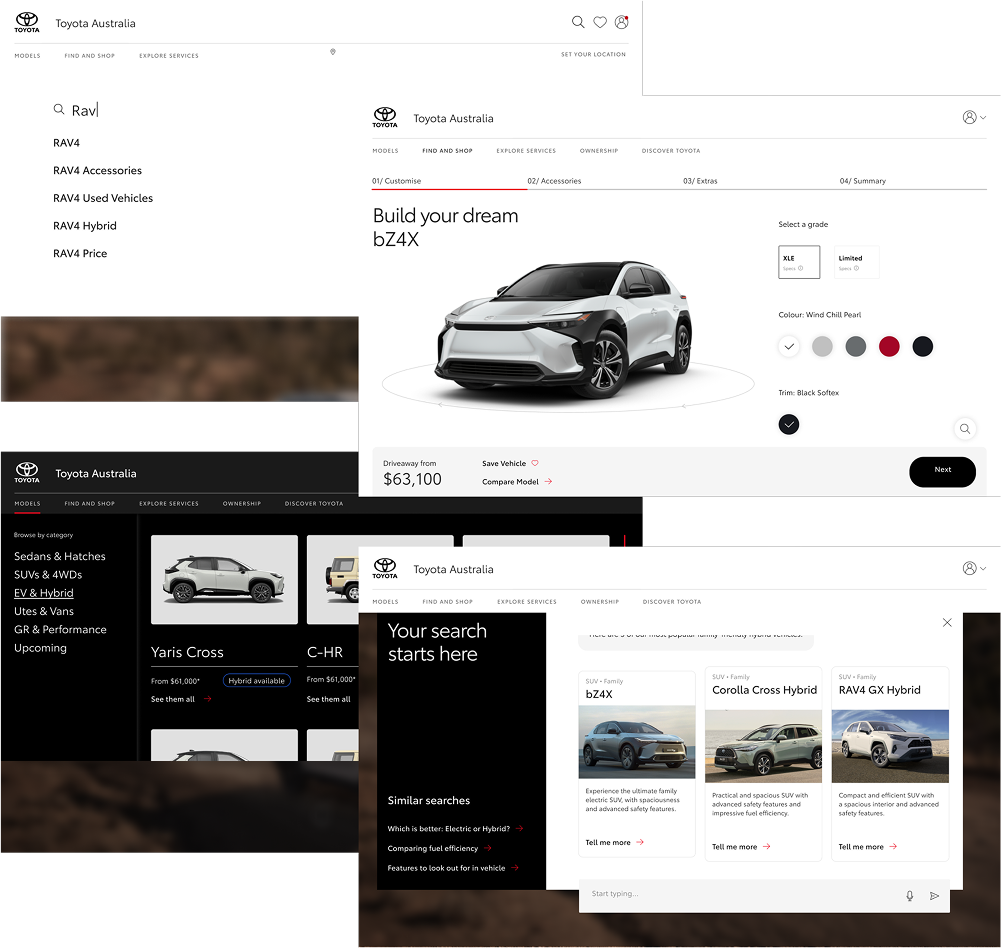
Systematic design to unlock scale
We collaborated with partners to create a digital style guide that acts as a shareable library for design, interaction and development. It means pages can be designed in a fraction of the time, with a common set of components; and developers can reuse code across multiple pages and screens, reducing time to market.